

Dubai fraud alert issued after Dh8,000 lost in fake holiday home booking scam
Police urge verification of property ownership before transferring any rental deposits
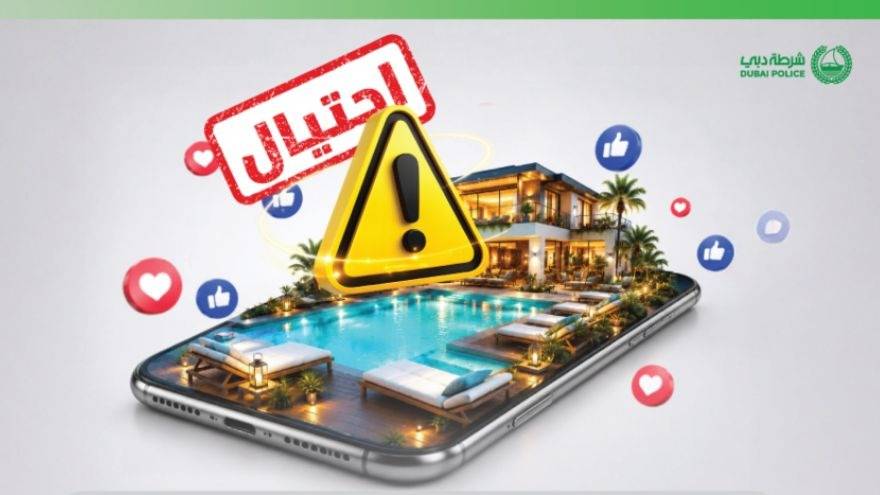
DUBAI – Police in Dubai have issued a renewed public warning as part of their ongoing ‘Be Aware of Fraud’ awareness campaign, cautioning residents against a growing number of electronic scams involving fake advertisements for chalets and holiday homes circulating on social media platforms and unofficial websites.
Authorities said fraudsters are increasingly targeting families during the summer holiday season, taking advantage of heightened demand for short-term rentals and discounted travel options. These deceptive listings are often designed to appear genuine, featuring professionally edited images, copied property details, and unusually attractive prices well below market value.
Officials confirmed that multiple complaints have already been received involving similar tactics, where victims were misled into transferring money for properties that either do not exist or have no connection to the individuals advertising them.
The warning follows a confirmed case in which a resident lost Dh8,000 after responding to a fraudulent chalet advertisement online. Dubai Police said the incident reflects a wider pattern of organised digital fraud operating through replicated listings and impersonation techniques.
Scam explained
Dubai Police explained that the scam follows a structured and repeated method that relies heavily on manipulation, urgency, and lack of verification.
Fraudsters begin by copying legitimate chalet or holiday home advertisements, including high-resolution images and detailed descriptions from genuine listings. These are then reposted across social media platforms and online classifieds at significantly reduced prices, designed to immediately attract attention.
Once a potential victim responds, communication is quickly shifted to private messaging applications. The scammer typically poses as a landlord or authorised agent and introduces additional conditions, including advance payments described as booking deposits, documentation charges, or refundable insurance fees.
In many cases, victims are told that the payment is necessary to secure the property due to high demand. This tactic is intended to create pressure and discourage verification or comparison with other listings.
Dubai Police noted that scammers consistently avoid in-person property viewings. When asked for inspections, they often delay, deflect, or provide excuses, maintaining communication solely through digital channels.
After the payment is made, the fraud is swiftly executed. Contact numbers are switched off, accounts are deleted, and all communication is cut off. Victims are then left without access to the advertiser or any legitimate rental agreement.
Authorities stressed that this method has been repeatedly reported across multiple cases, indicating a coordinated approach rather than isolated incidents.
How victim was defrauded
Dubai Police confirmed that a recent report involved a family breadwinner who was deceived after spotting an online advertisement for a chalet in Dubai.
The listing, shared on a social media platform, presented an appealing offer featuring professional photographs and a competitive rental price. Believing the offer to be legitimate, the victim initiated contact with the advertiser.
During communication, the scammer requested a deposit along with an additional insurance fee, both of which were claimed to be refundable after completion of the booking process. The urgency of the offer and assurance of refund led the victim to proceed with the transfer.
A total of Dh8,000 was sent to the provided account. Shortly after the transaction, the situation changed abruptly. The advertiser’s phone was switched off, and all communication channels became unreachable.
Dubai Police said the victim later discovered that the property either did not exist in the form advertised or the listing had been created using stolen images and false details taken from legitimate sources.
Investigators noted that similar complaints have been recorded in recent months, with victims reporting nearly identical methods of deception involving upfront payments and false assurances of refundable deposits.
The emotional and financial impact of such scams, authorities said, is often intensified by how quickly the fraud is executed, leaving minimal opportunity for recovery once funds are transferred.
Warning signs
Dubai Police highlighted several key indicators that residents should watch for when evaluating online rental listings.
One of the strongest warning signs is an unusually low rental price compared to similar properties in the same area. Fraudsters deliberately set prices below market value to create urgency and attract immediate interest.
Authorities also warned against high-pressure tactics used to rush decisions. Scammers frequently claim that multiple renters are interested or that the offer is available for a limited time only. This is intended to prevent proper checks or verification.
Another major red flag is the refusal to allow physical inspections of the property. Genuine rental transactions typically include viewing arrangements or verification through licensed real estate agents. In contrast, fraudulent advertisers avoid in-person meetings entirely.
Dubai Police further noted that requests for payment to personal accounts or unknown beneficiaries should be treated with extreme caution. Legitimate landlords and licensed agencies follow regulated payment channels that provide traceability and legal protection.
Officials added that reliance solely on images, chat conversations, or social media profiles is risky, as these can be easily fabricated or manipulated using content taken from genuine property listings.
Residents were urged to verify ownership details and confirm the legitimacy of the advertiser through official property records before making any financial commitment.
Safety measures
Dubai Police urged the public to adopt strict verification procedures before engaging in any rental transactions, particularly during peak travel seasons when demand for holiday homes increases significantly.
Authorities advised residents not to transfer any funds before physically inspecting the property or confirming its existence through authorised real estate platforms. Where properties are located outside the UAE, users should still verify the identity of landlords or agencies through recognised channels.
The Force stressed the importance of confirming ownership documents and ensuring that the individual or company advertising the property is legally authorised to lease it. All transactions should be completed through official and regulated systems rather than informal arrangements.
Residents were also cautioned against responding to pressure tactics, especially claims that prices will increase or that availability is extremely limited. Such messages are commonly used to force quick decisions without due diligence.
Dubai Police reiterated that payments should never be made to personal or unverified accounts under any circumstances. Instead, transactions should only be carried out through secure and traceable financial channels linked to licensed entities.
The Force encouraged the public to report suspicious advertisements, websites, or individuals immediately through the e-Crime platform or by calling 901 for non-emergency cases.